Introduction: The Emergence of AI and the Zero Click Phenomenon
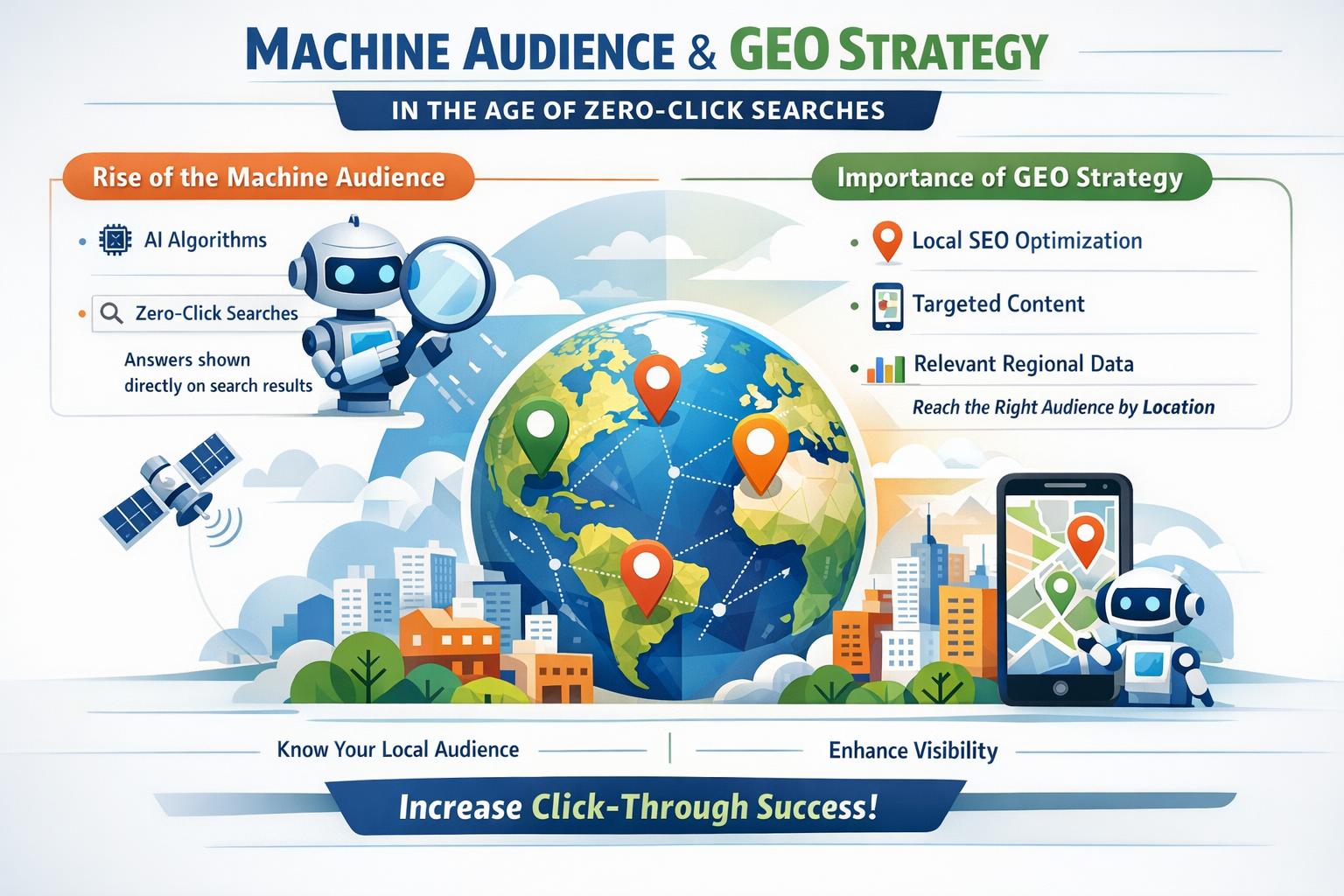
Advancements in AI technology are fundamentally changing the way information is searched. In particular, generative AI such as ChatGPT and Google Gemini are having a severe impact on Organic Traffic—the traditional source of website traffic—by providing immediate answers to user inquiries. This situation is referred to as the "Zero Click Shock," which describes a phenomenon where users can obtain desired information without clicking on search results. For companies, whether AI cites their content, rather than simply ranking at the top of search results, has become a critical factor for survival. Consequently, a GEO strategy has become increasingly essential.
The Emergence of the Machine Audience
AI search engines and browser agents now hold the reins of information distribution. As a result, companies and media outlets are facing a new challenge: they must consider not only humans but also machine-based AI models. The emergence of these machine users has ushered in the era of the "second zero click," and companies must reorganize their content strategies to target this new readership.
Companies must move beyond producing content simply for human consumers and provide information optimized for AI to understand. This requires technical approaches such as schema markup, which helps AI interpret and cite information more accurately.
Execution Framework of the GEO Strategy
The Geographic and Environmental Optimization (GEO) strategy is an essential element for companies to be effectively cited in AI search engines. The GEO strategy includes the following three key elements.
1. **Content Structuring (Schema Markup)**: Structuring a company's content using FAQ schemas in JSON-LD format enables AI language models to better understand the information. This ultimately contributes to increasing citation potential and strengthening brand visibility.
2. **Building a Knowledge Graph**: By constructing a reliable information network, companies can enhance brand credibility. A knowledge graph visualizes the relationships between various data points, helping users to understand them easily.
3. **Enhancing Authority and Credibility (EEAT)**: Content that includes statistical data or expert quotations significantly increases the likelihood that AI will cite that information. Research shows that statistical data provides approximately 41% higher visibility, while expert quotations demonstrate a 28% improvement in performance.
The Need for New Performance Indicators
In the AI era, you should not rely solely on traditional SEO KPIs such as Click-Through Rate (CTR). Instead, you must separately track **AI platform traffic (LLM Referral Traffic)** and **conversion rates of AI-acquired users**. These new metrics provide companies with the data necessary for business growth.
Conclusion: The Importance of GEO Strategy and Business Implications
The GEO strategy signifies more than just a marketing technique. It is a fundamental approach to building trust capital with customers, the public, and investors. Companies that proactively incorporate GEO into their existing SEO and advertising will gain a competitive edge and achieve sustainable growth in the digital marketing environment.
Ultimately, to survive the era of 'zero-click shock,' it will be necessary to respond agilely to technological changes and meet the demands of machine users through GEO strategies.